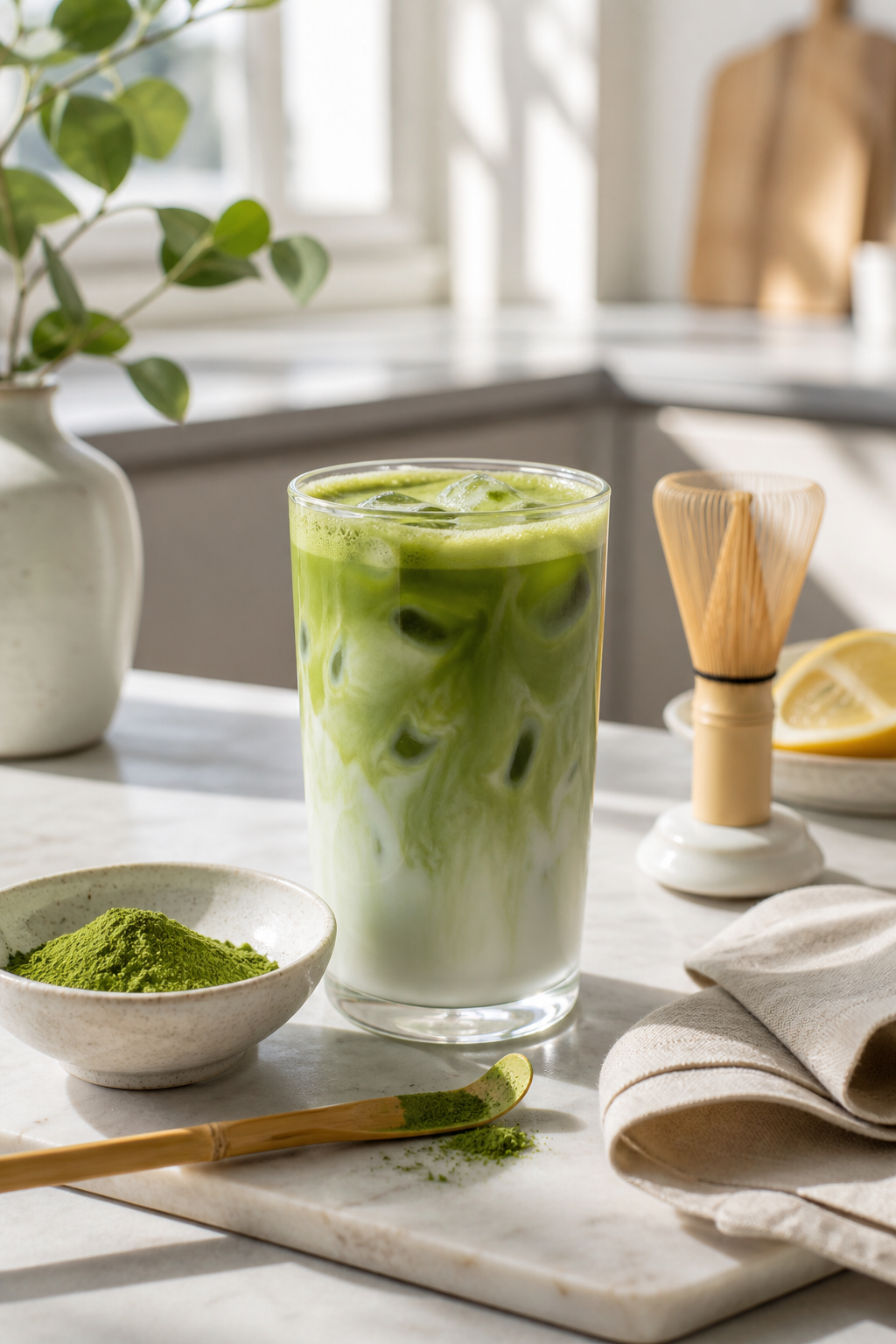
Caffeine, measured
A typical bowl of matcha (2 g) carries roughly 60–70 mg of caffeine; a standard cup of coffee lands around 90–120 mg. But the number is only half the story — the delivery differs.
Matcha pairs caffeine with L-theanine, an amino acid that smooths its release. Most people describe the result as alert but calm, without coffee's spike-and-dip.
Side by side
- Onset — coffee hits faster; matcha rises gently.
- Duration — matcha's lift tends to plateau longer.
- Body feel — L-theanine softens jitters and edge.
- Stomach — matcha is gentler for many who find coffee acidic.
- Ritual — whisking a bowl builds a pause into the day.
Coffee sprints. Matcha keeps a steady pace.
When each one fits
Reach for coffee when you want immediate ignition. Reach for matcha for long focused sessions — deep work, study, an afternoon that needs clarity without a crash.
They are not rivals so much as different tools. Plenty of people keep both: coffee for the first jolt, matcha for the sustained middle of the day.
If afternoon coffee disturbs your sleep, an early-afternoon matcha is a kind swap.