.png)
What "grade" really means
Matcha is not officially graded by law — the terms describe intent. Ceremonial grade is made from the youngest first-harvest leaves, shaded longest and milled finest, meant to be whisked with water and enjoyed on its own.
Culinary grade uses slightly later harvests with a stronger, more assertive character. That strength is a feature, not a flaw: it keeps matcha flavor present through milk, sugar, and heat.
How they differ in the bowl
- Color — ceremonial is vivid jade; culinary leans deeper and more olive.
- Taste — ceremonial is round and umami-sweet; culinary is brisk and robust.
- Texture — finer ceremonial powder froths into a softer foam.
- Price — first-harvest leaves and slow milling make ceremonial dearer.
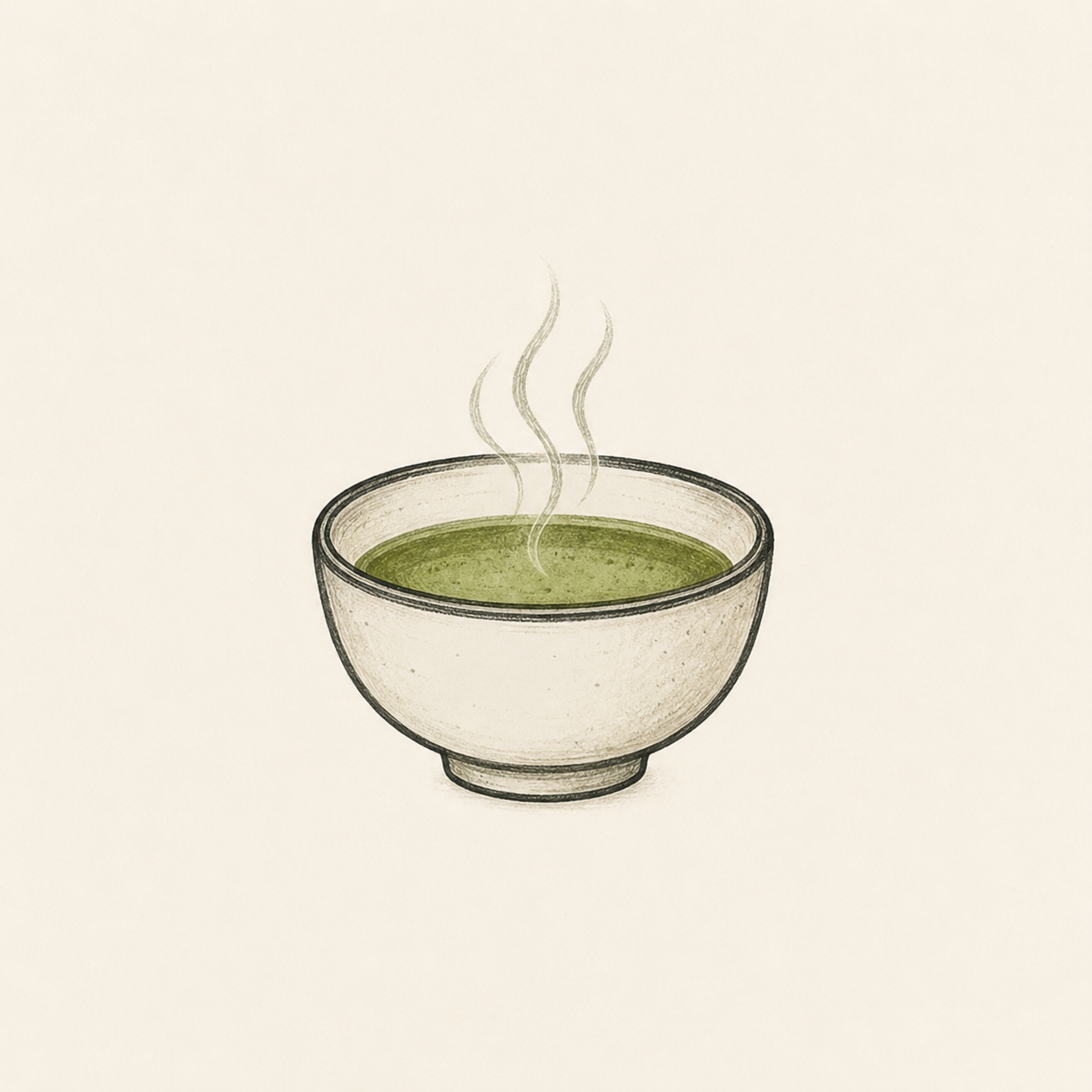
Choose by how you will drink it, not by the label alone.
Which should you choose?
If you plan to drink matcha whisked in water — usucha or koicha — choose ceremonial. Its balance and low bitterness are exactly what you are paying for.
If you are making lattes, smoothies, ice cream, or baked goods, a good culinary matcha is the smarter choice. Its bolder profile stays expressive where a delicate ceremonial would fade.
Many tea lovers keep both: one tin for the quiet bowl, one pouch for the kitchen.