The whole leaf, whisked into water
Most tea is an infusion: leaves steep in water, then are set aside. Matcha is different. The leaf itself is ground into a powder so fine it suspends in water — which means when you drink matcha, you drink the entire leaf, with all of its flavor, color, and nutrients.
This single difference explains almost everything people love about matcha: the intensity of its taste, its vivid green color, and the gentle, sustained lift it provides.
Where matcha comes from
Matcha begins as tencha — tea leaves grown in the shade for several weeks before harvest. Shading slows the plant's growth and concentrates chlorophyll and L-theanine, the amino acid behind matcha's signature umami and calm focus.
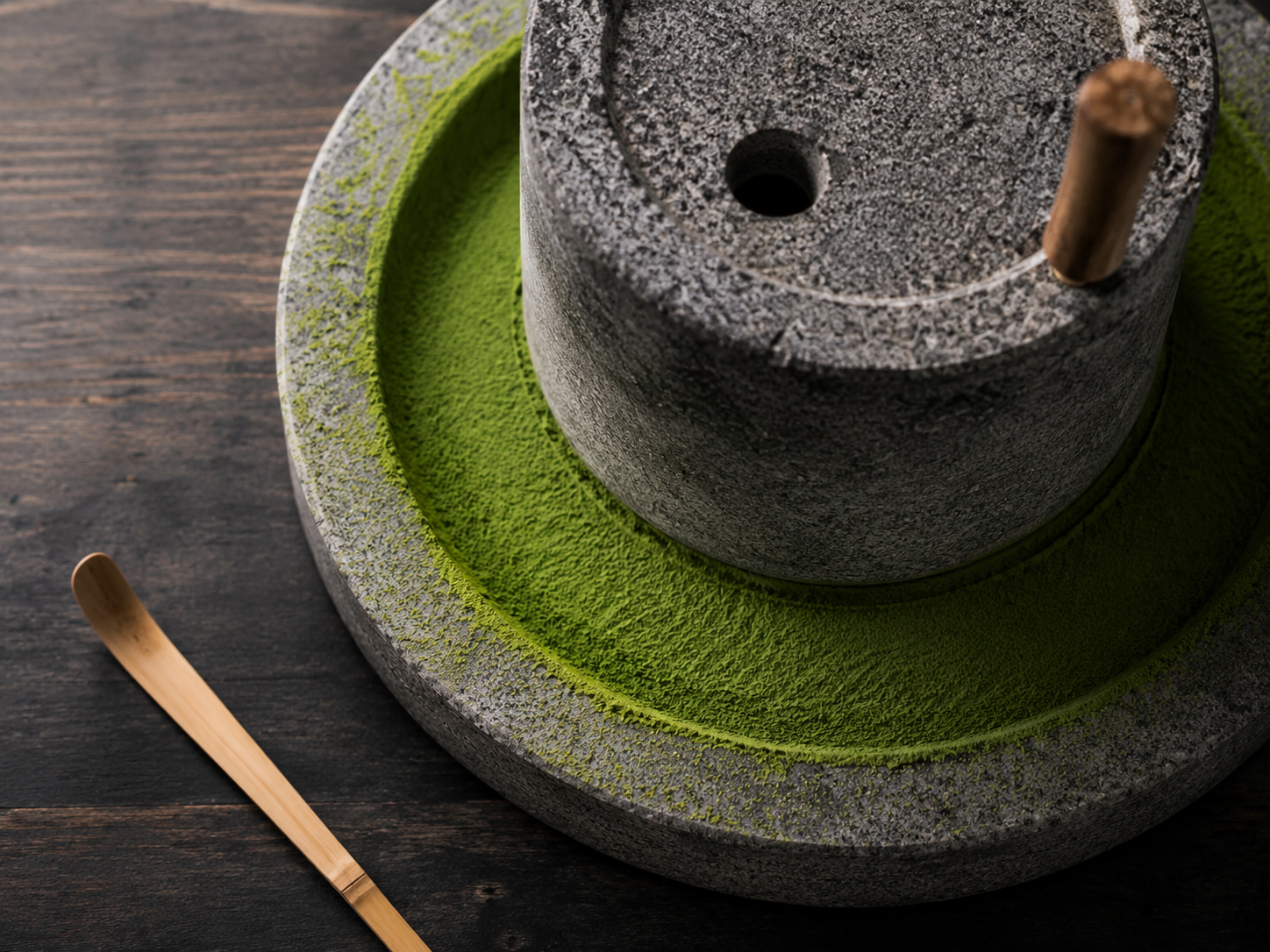
After harvest, the leaves are steamed to preserve their color, dried, and carefully de-stemmed and de-veined. What remains is slowly ground between granite stone mills — a process so gentle that a single mill produces only about 40 grams in an hour.
.png)
What makes it special
- Umami depth — shading builds L-theanine, giving matcha its round, savory sweetness.
- Vivid color — high chlorophyll and careful steaming keep the green bright and alive.
- Calm energy — caffeine paired with L-theanine releases slowly, without the spike of coffee.
- Ritual — preparing matcha with a bamboo whisk turns a drink into a mindful pause.
Good matcha is not just tasted, it is experienced.
How it is enjoyed
Traditionally, matcha is whisked with warm water into usucha (a light, frothy bowl) or kneaded into koicha (a thick, concentrated form used in the tea ceremony). Today it is just as loved in lattes, iced drinks, and desserts — anywhere its flavor and color can shine.
If you are new to matcha, start with a ceremonial grade whisked simply in water. It is the clearest way to taste what the leaf has to offer.