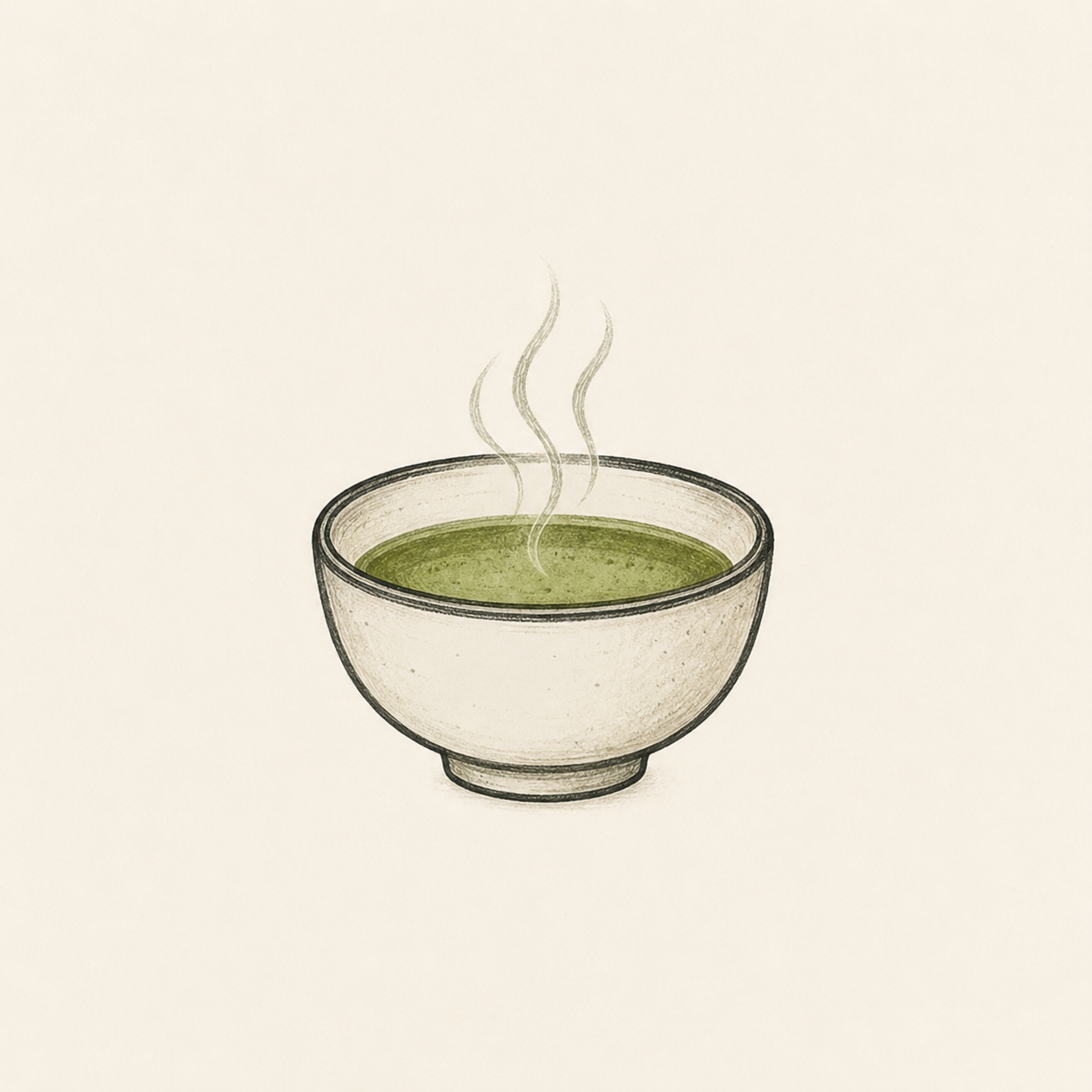
The five marks of quality
- Umami — a round, savory depth, the signature of shade growing.
- Sweetness — gentle and vegetal, never sugary.
- Freshness — bright green aroma, like young leaves after rain.
- Body — a silky, almost creamy weight on the tongue.
- Finish — clean and lingering, with no harsh edge.
What you should not taste
Good matcha may be pleasantly brisk, but it should never be aggressively bitter, dusty, or flat. Sharp bitterness usually points to lower-grade leaf, water that is too hot, or powder past its prime.
Color is your ally: a dull, yellowish green often predicts a dull, bitter cup before you ever taste it.
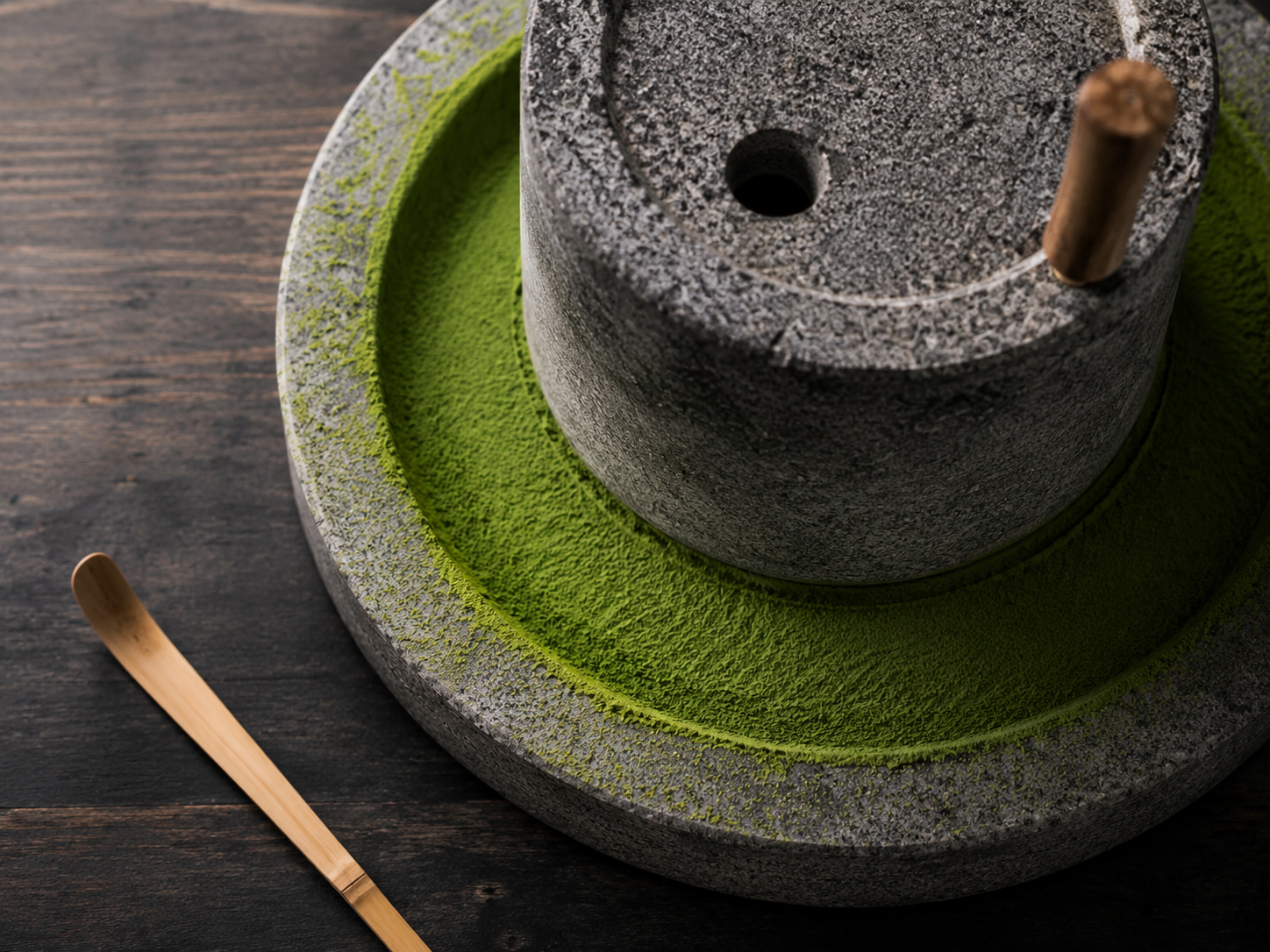
Umami first, sweetness behind it, and a finish that asks you to pause.
How to taste with attention
Whisk two grams with seventy milliliters of water around eighty degrees Celsius. Smell the dry powder, then the foam. Take a first sip for impression, a second for detail: where does sweetness appear? How long does the finish stay?
Taste the same matcha a few days in a row — familiarity is the fastest teacher.